


Rather than take a look at one of the countless hidden gems in Japan as we usually do, today, I want to zoom out and discuss why one ought to, or even needs to, get off the beaten path when visiting. Truth be told, as all OG readers will know, this is a topic that I’ve touched on a few times in the past. Alas, with the government looking to welcome upwards of 60 million tourists and existing infrastructure in mainstream locales already stressed to the breaking point, never has it been more important to explore alternative destinations.
By now, it should really come as no surprise that overtourism in Japan is an ongoing issue. Simply put, Kyoto and its ilk are now so crowded that they have become mockeries of the very image that put them on the radars of visitors to Japan in the first place. That quiet and quaint ancient capital of Japan that is chock full of charming shrines and temples? Yeah, that has largely fallen by the wayside these days, instead replaced with hordes of tourists packing the streets leading up to sites like the famed Kiyomizu-dera. As you might imagine, the appeal is little more than a fleeting dream that no longer exists.
Now, one of the theories that I put forth years ago is that truly authentic travel experiences are the combination of great attractions, a solidly sufficient contextual understanding of the backstory, and the absence of crowds. The rationale behind this framework is simple. Without exception, it is simply impossible to feel immersed in the travel experience when you are shoulder to shoulder with thousands of other tourists, all clamoring to see the same sites and snap the same pics. Nowadays, the highlights of Kyoto have literally become the equivalent of cultural Disneyland.
What’s more, the weak yen has also attracted the worst caliber of tourist imaginable—think people who are coming to Japan because it’s cheap, not because they have any reverence for the culture. Before the big tourism boom in the years leading up to the pandemic, the country largely only welcomed people who had a yearning for Japan and its rich culture. Lately though, we are getting the bottom of the barrel, such as this atrociously rude woman who blew up on social for chasing down a geisha in Kyoto as if she were a zoo animal. I mean, you know it’s bad when even other tourists from abroad take offense and try to stop her!
The Expansion of the Mainstream
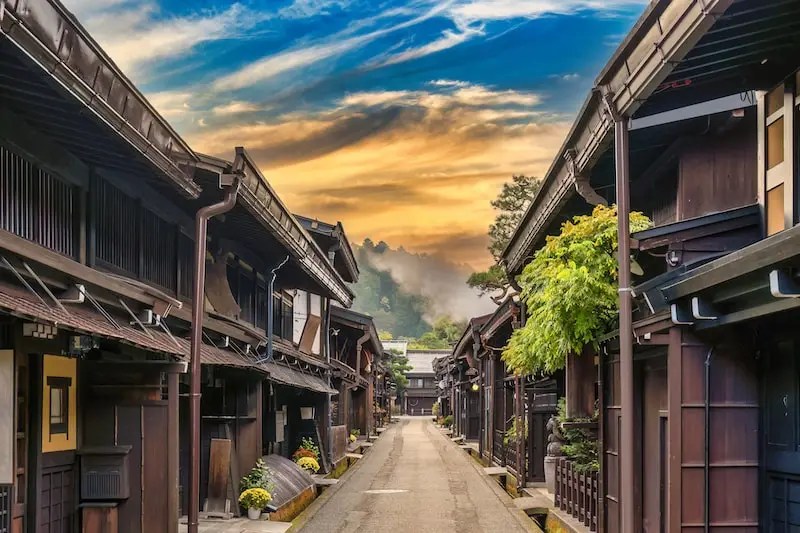
In the days of yesteryear, it used to be enough to just visit alternatives such as Kanazawa or Hida-Takayama, as the worst of overtourism was confined to the so-called “Golden Route.” These days though, this is no longer sufficient, as now many visitors are also venturing further off the well-worn path for their second, third, or even tenth visit to Japan. While it’s indeed good that there is some diversity in the destinations that tourists are choosing, the ever-expanding definition of what is mainstream means that those seeking truly authentic travel experiences need to find other spots that have yet to be spoiled.
As noted before, I am firmly of the belief that Great Attractions + Cultural Context − The Crowds = Authenticity. As certain locations begin to become more popular though, they slowly start to be commodified. To some extent, this is OK, as the infrastructure can aid in improving a destination’s merit. At some point though, a line is crossed, and the spot becomes somewhere for “sightseeing,” with all of the worst connotations of that word. Put another way, the place in question loses the very essence that made it alluring in the first place due to over-commodification.

Seeking authenticity when traveling is truly the key to having deep and memorable experiences when visiting Japan. It’s the difference between having a cooking class in Tokyo that’s conducted in English and making ramen in Fukushima Prefecture’s famed noodle capital, Kitakata, with a local legend. Unfortunately, this kind of authentic experience, which is deeply tied to regional identity, is largely impossible when a place is afflicted with overtourism. The sense of immersion is simply shattered by all the other travelers there, be they Japanese or foreign.
Oftentimes, I get called “classist” on 𝕏 (formerly Twitter) or Threads when I aggressively clap back at someone and say that Japan is currently attracting a low caliber of tourist since the borders reopened in 2022. At the risk of being a bit offensive, I’ve got to double down and say that there is just no other way of looking at it. The weak yen has caused Japan to become what Bali is to Australians for many people in the West and in Asia. And, as anyone who drops by the likes of Asakusa’s Senso-ji can see, the quality drop is extremely palpable. Though I dare not say these people can’t come, savvy travelers would do well to avoid them.
This now brings us back to why it is so important to get off the beaten path these days when visiting Japan. While I was always a proponent of this way of traveling, it’s become almost obligatory lately for anyone hoping to have an authentic experience of Japanese culture. After all, few things ruin the solemn serenity of a Shinto shrine much like a loudly arguing European family or a view-addicted “influencer” trying to clip farm for more online clout. No, to really enjoy Japan, you need to ditch these kinds of people and the mainstream attractions that you’ll find them at.
How to Get Off the Beaten Path in Japan

So, how does one get off the beaten path when visiting Japan as a guest from overseas (that likely doesn’t speak the local tongue)? Luckily, this isn’t as difficult as it might seem. In fact, even along the Golden Route that stretches from Tokyo to Hiroshima, there are so many easy opportunities to add alternative destinations to your itinerary. For example, one that I just featured recently is Shodoshima. Found between Honshu and Shikoku, you can catch a ferry out to the island from Himeji, continue on to Takamatsu, and then either explore Shikoku or head back to Okayama Prefecture.
Of course, one can go a lot further off of the proverbial beaten path than this. And, with the government foolishly chasing that 60 million tourists milestone, the only real way forward is destination diversification. While I personally would prefer that JNTO and other such tourism-related agencies set their KPIs as revenue from tourism instead of a mere body count, the goal is ultimately what the government decides. As a result, the only option left on the table for travelers hoping to have an authentic trip is to better spread out so that no one location dies in a deluge of demand like Kyoto. Without reevaluating Japan’s objectives, there is just no other path forward.

One thing that is worth noting is that there are many ways that one can get off the beaten path. While the selection of destinations is what most people rightly think of, you can avoid the worst of the crowds via other means such as exploring at odd hours or coming during the off-season. For example, September tends to be a bit of a lull between the end of summer holidays and the rush for the fall foliage. That said, those who do make a trip during mid to late September can enjoy the red spider lilies at Kinchakuda Manjushage Park and other locations all throughout the country.
Perhaps my favorite way to ditch the crowds is to simply head where they are assuredly not. Here, I am talking about somewhere like Kochi Prefecture on the far side of Shikoku. Blessed with rich natural environs, an ancient samurai legacy, and some of the best seafood around, Kochi has all of the trappings that make for an amazing travel experience but none of the hordes of “normie” travelers found elsewhere. Because of this, it’s a lot easier to feel immersed in the culture of Kochi when you don’t need to share the prefecture with literal busloads of overseas NPCs.
As much as I love the likes of Tohoku and Shikoku though, you really do not need to go that far to find a bit of authenticity. So long as you keep on the lookout for destinations and experiences that haven’t yet been specifically commodified for international tourism, you’ll be fine. Though, yes, this does require a bit of extra effort to do research on what to see and do, dodging the insanity that is the overtourism you’ll find at Japan’s hot spots is more than worth the time it takes.
Finding Hidden Gems & Closing Thoughts

By the way, with where AI is going, doing travel research has never been easier. Not only is language no longer an obstacle, tools like ChatGPT can do all of the heavy lifting for you. This helps bridge what I call the “awareness problem,” whereby travelers can’t search for existing info about hidden gems because they don’t know what they don’t know. With AI though, you can just jot down what your likes and needs are and it can function like your virtual concierge. In fact, I’ve gone ahead and distilled a decade of my own explorations into a free AI trip planner, so you don’t even need to start from scratch.
So, to recap, it’s more important than it likely ever has been now to get off the beaten path and explore the lesser-known sides of Japan. Not only will you not need to share it with anyone else like you would at more famous spots, you’ll also inject some much-needed authenticity back into your travels to a country that is quickly becoming overrun with the worst kinds of tourists. Trust me when I say, you’ll thank me later!
Until next time travelers…
